
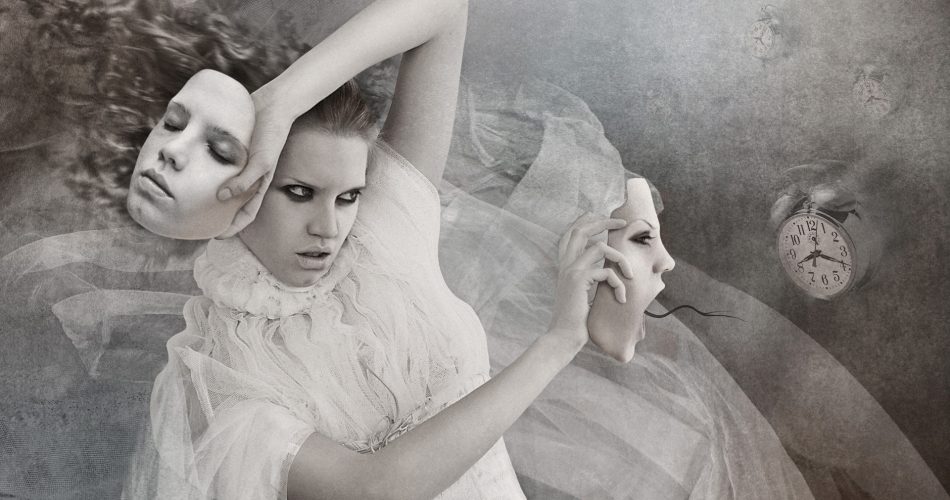
Let’s talk about witches.
Today, the myth of the witch conjures up images of malevolent women with supernatural powers: shape-shifting, speaking to spirits, making pacts with the Devil, and wreaking chaos wherever they go. In ancient times, however, the picture was more complex. Witches appeared in figures such as Circe, the sorceress of Greek mythology who turned men into swine, and in priestesses and ritual specialists associated with healing, wisdom, and esoteric knowledge. Later, under the growing influence of Christianity in Europe, these figures became increasingly entangled with darkness, temptation, sin, and the forbidden.
And so the witch survived in the collective imagination as someone to fear: the shadow of female power, the symbol of temptation and promiscuity, dangerously intelligent, and in touch with forces that could not be fully explained, controlled, or systematized. History bears out the violence of that fear. During the great witch hunts of early modern Europe, historians estimate that between 40,000 and 60,000 people were executed for witchcraft, and around 80 percent of those accused were women. Many of them were not practicing any “dark magic” at all. Some were marginalized women, some were healers, some were simply suspected of possessing an unsettling kind of influence or knowledge.
So, what made these women dangerous? I’d argue it wasn’t evil, but unauthorized access: to power, to healing, to knowledge, and to the unseen through their relationship with nature, with the body, sexuality, and that elusive force we still call intuition. The witch became a cultural vessel for fears around female autonomy, and while we may no longer burn women for this kind of power, we still seem to be training them away from it.
The Body as Oracle: Reclaiming Gut Feeling in the Age of External Signs

Lately, I’ve noticed a growing pattern among women. We are relying more and more on signals from outside ourselves when making decisions: psychics, angel numbers, TikTok theories and endless forms of spiritual or emotional outsourcing.
Among women drawn to Wicca and divination, this disconnection from the inner compass becomes even more visible. Some of those who are open enough to see tarot, dreams, or symbols as meaningful end up turning to AI to explain and interpret them “correctly,” as if the final authority on the subconscious should come from a machine. I’ll write more about AI and tarot another time. What matters here is that these are all symptoms of the same condition: we are born connected to our bodies, then gradually trained to live estranged from them. We suffer from a kind of body illiteracy, one that is not only encouraged but often rewarded as maturity, productivity, and social functioning.
To be clear: the tools themselves are not the problem. Tarot, dreams, ritual, divination are great pathways to self-knowledge when used with awareness. The issue arises when they become substitutes for that awareness rather than invitations into it. When you pull a card and immediately ask someone else what it means for you, when you outsource the final word on your own inner life, you have left yourself out of the equation entirely. The practice simply becomes another voice telling you who to be.
Think of it like this: how many times have you said yes to helping everyone, even when every yes landed like a stone in your stomach? Maybe you dismissed the feeling because you wanted to be reliable, good, or easy to love. Or maybe you never paid enough attention to notice it in the first place. So you kept going until you snapped, overwhelmed and full of resentment, wondering how you got there and how to get out.
That is what I mean by body illiteracy: treating the body’s signals of exhaustion, contraction, or misalignment as irrational instead of informative. We are taught to correct ourselves before we are taught to read ourselves. We learn to care more about how we appear than about what we feel, and all of that has consequences for our sense of self, our decisions, and even our spiritual lives.
The most important skill we can relearn, both as women and as spiritual practitioners, is how to listen inward again. Because the body is one of the first places where intuition, inner truth, and magic happen.
Gut Feeling Is Not the Opposite of Intelligence
One question that keeps circling across multiple generations of women is this: how do we tell the difference between anxiety and gut feeling? I have struggled with that myself, and one of the most useful things somatic therapy has taught me is that the body often gives an answer before the mind has time to explain it away.
I remember one of my first therapy sessions, when my therapist asked me to make a list of people, places, and things that felt like good energy resources, things I genuinely felt nourished and energized by. As I was writing, one important woman from my life came to mind. She was a life coach who had helped me enormously in the past and had opened the doors to spirituality and wellness for me. She had changed the course of my life in many ways. She was someone I could vent to, someone who made me feel seen and validated. On paper, she should have been one of the first names on the list.
But when I thought of her in that context, my body closed up and I honestly couldn’t write her down.
At the time, it made no sense. Rationally, she belonged on the page. But a few weeks later, after sitting with the discomfort instead of dismissing it as irrational, I understood why. She did have good intentions, but she was also making me into a kind of spiritual wonderchild, someone destined to heal everything at once and become some sort of guru at twenty-three. The validation felt good, but the pressure that came with it didn’t. And my body knew that long before my mind could explain it.
This is what I mean by gut feeling: an early bodily response that carries information before the mind catches up. Researchers have a name for this idea, somatic markers. In simple terms, past experiences leave traces in the body, and those traces help us recognize patterns before we can fully reason them through. The body reacts first, and meaning often comes later.
That is not to say we should dismiss rational intelligence, but rather that mind and body work best together. The body holds a kind of knowing that may not sound logical at first, but it is ancient and just as important.
The Witch’s Body as a Site of Power and Knowing

Just like the body can know before the mind catches up, witches and other spiritual practitioners have worked with this kind of knowledge long before science and psychology gave it names. In many Pagan and Wiccan traditions, the body is treated as one of the main instruments of spiritual truth.
This is one of the things I find most compelling about these traditions: they do not split the sacred from the body in the way many mainstream religious systems historically have. The body becomes a place of contact, perception, and ritual intelligence. Contemporary Pagan scholarship notes that many Pagan traditions explicitly affirm the sacredness of the body and sexuality, especially those influenced by British Wicca. In that worldview, the body is one of the places where the divine is felt in the first place.
One of the clearest examples is the Wiccan ritual known as Drawing Down the Moon, in which the Goddess (their version of God or divinity) is invoked to enter and speak through the body of the High Priestess. The Charge of the Goddess incantation says all of this more elegantly than I ever could. In Wiccan practice, it is often recited in ritual as the living voice of the Goddess, spoken through the priestess. That alone says something important: the body is not outside the sacred. It is one of the ways the sacred becomes audible. And then comes the line that strikes at the heart of this entire piece:
“If that which thou seekest thou findest not within thee, thou wilt never find it without.”
In other words, no sign from the outside can replace the relationship you have with what is already alive inside you. You can search for signs, readers, symbols, rituals, and messages everywhere, but if you are cut off from your own inner knowing, none of it will truly help you.
Final Thoughts
When women in spiritual spaces are taught to distrust the body, they are being cut off from themselves psychologically. They are also losing access to one of the oldest tools of spiritual knowing.
Magic, intuition, psychic insight, inner truth, however you choose to name it, may not be as far from us as we think. Perhaps they have been speaking through us all along, in the language of contraction and openness, calm and unease, resonance and recoil. The task is not to become more magical. It is to become more literate in what the body is already telling us.
So here’s where I’d invite you to start: the next time you feel a pull toward a card, a sign, or a reading, pause before you seek an outside interpretation. Sit with the image, the feeling, the symbol for a moment first. Ask your body what it already knows. What contracts? What opens? The answers that come from that place, however inconvenient they might seem to the mind, are the ones most worth trusting.

